-
 From Online Trolling to CEO’s Defense, DLSS 5 Unveiling Draws Heat: Five Things to Know19 March 2026
 -
Adobe, Nvidia Join Hands to Build the Next Generation of Firefly Models18 March 2026
-
Nvidia Unveils DLSS 5 Graphics Upscaler, Issues Clarification After Backlash Over 'AI Slop Filter'17 March 2026
-
Nvidia Introduces NemoClaw, an AI Stack to Make OpenClaw Agents More Secure17 March 2026
-
Nvidia GTC 2026: How to Watch Jensen Huang’s Nvidia Keynote and What to Expect15 March 2026
- Home
- Transportation
- Transportation News
- Nvidia Turns to Driver Assistance Market as Robo Taxis Stall
Nvidia Turns to Driver-Assistance Market as Robo-Taxis Stall
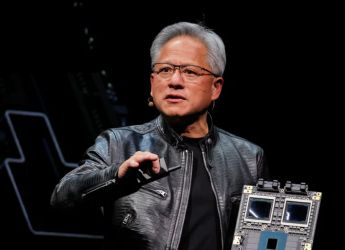
Nvidia's new self-driving technology uses the "Orin" processing chip the company launched in December.
By Reuters | Updated: 15 May 2020 18:58 IST

Photo Credit: Reuters/ Nvidia
"We're the (AI) brain that would go into this," Nvidia'a senior director of automotive said
Click Here to Add Gadgets360 As A Trusted Source

Advertisement
Nvidia, whose semiconductors power data centers, autonomous cars and robots, said on Thursday it plans to enter the market for technology that helps cars with automated lane-keeping, cruise control and other driver-assistance features.
The move, announced as part of the chip company's annual conference, which was held online this year, represents a change in direction for Nvidia. Until now, the Santa Clara, California-based company has supplied key technology aimed at making autonomous vehicles that require much more sophisticated computers.
But such vehicles, some of which are known as "robo-taxis," remain years away from mass adoption. Even before the coronavirus pandemic hammered the world economy, automakers such as General Motors and Ford were dialing down their expectations for self-driving cars.
Many of the driver-assistance features that the new Nvidia system will enable, by contrast, are already available on high-end vehicles with technology from providers such as Mobileye, the Israeli firm owned by Nvidia data center rival Intel.
Danny Shapiro, senior director of automotive at Nvidia, said the shift in strategy is aimed at meeting the existing needs of automakers that struggle with maintaining two systems – one for the driver assistance available today, and one for more advanced self-driving technology for the future.
The new Nvidia system means automakers will be able to use one system for both, saving engineering efforts and using some of the self-driving technology to improve the driver assistance functions, Shapiro said.
“We have a single architecture that will enable the automaker to span every potential level of automation they want to deliver and put that software-updatable system in every single vehicle,” Shapiro said.
Nvidia's new self-driving technology uses the "Orin" processing chip the company launched in December. Shapiro said he expected vehicles using the system could start production in early 2023.
Shapiro declined to comment on pricing or potential automaker customers. However, he said the Nvidia chips will be part of a larger system that includes cameras and will likely be built by traditional automotive suppliers such as Continental AG, ZF Friedrichshafen AG or Robert Bosch.
"We're the (artificial intelligence) brain that would go into this," Shapiro said.
© Thomson Reuters 2020
Which is the bestselling Vivo smartphone in India? Why has Vivo not been making premium phones? We interviewed Vivo's director of brand strategy Nipun Marya to find out, and to talk about the company's strategy in India going forward. We discussed this on Orbital, our weekly technology podcast, which you can subscribe to via Apple Podcasts or RSS, download the episode, or just hit the play button below.
Comments
Get your daily dose of tech news, reviews, and insights, in under 80 characters on Gadgets 360 Turbo. Connect with fellow tech lovers on our Forum. Follow us on X, Facebook, WhatsApp, Threads and Google News for instant updates. Catch all the action on our YouTube channel.
Further reading:
Nvidia, Self Driving Cars
Related Stories





Advertisement
Follow Us




-
![[Sponsored] Samsung Galaxy S26 Ultra First Look: AI Smartphone for Creators, Gaming & Productivity](https://www.gadgets360.com/static/desktop/images/spacer.png)
02:29
[Sponsored] Samsung Galaxy S26 Ultra First Look: AI Smartphone for Creators, Gaming & Productivity -
04:25
Vivo X200T Review - Full Camera, Gaming & Battery Test | Worth Buying? -
28:31
The Future of Productivity: Logitech's Anatoliy Polyanker On AI, Hybrid Work, And India's Tech Boom -
04:46
Infinix Note Edge 5G Review | Budget 5G Phone With Premium Features? -
04:54
Redmi Note 15 Review: Features, Specifications, Pros, Cons, And Everything Else
Advertisement
Popular on Gadgets
- Samsung Galaxy Unpacked 2026
- iPhone 17 Pro Max
- ChatGPT
- iOS 26
- Laptop Under 50000
- Smartwatch Under 10000
- Apple Vision Pro
- Oneplus 12
- OnePlus Nord CE 3 Lite 5G
- iPhone 13
- Xiaomi 14 Pro
- Oppo Find N3
- Tecno Spark Go (2023)
- Realme V30
- Best Phones Under 25000
- Samsung Galaxy S24 Series
- Cryptocurrency
- iQoo 12
- Samsung Galaxy S24 Ultra
- Giottus
- Samsung Galaxy Z Flip 5
- Apple 'Scary Fast'
- Housefull 5
- GoPro Hero 12 Black Review
- Invincible Season 2
- JioGlass
- HD Ready TV
- Latest Mobile Phones
- Compare Phones
Latest Gadgets
- Samsung Galaxy A37 5G
- Samsung Galaxy A57 5G
- Vivo Y11 5G
- Vivo Y21 5G
- Realme P4 Lite 5G
- OnePlus 15T
- Huawei Mate 80 Pro Max Wind Edition
- Huawei Enjoy 90 Plus
- Xiaomi Book Pro 14
- MacBook Neo
- Lenovo Legion Y700 Gen 5
- Tecno Megapad 2
- boAt Valour Watch 1R
- Xiaomi Watch S5
- Xiaomi QLED TV X Pro 75
- Haier H5E Series
- Asus ROG Ally
- Nintendo Switch Lite
- Haier 1.6 Ton 5 Star Inverter Split AC (HSU19G-MZAID5BN-INV)
- Haier 1.6 Ton 5 Star Inverter Split AC (HSU19G-MZAIM5BN-INV)

- About Us
- Sitemaps
- Feedback
- Archives
- Contact Us
- RSS
- Advertise
- Career
- Privacy Policy
- Ethics
- Editorial Policy
- Terms & Conditions
- Complaint Redressal
Download Our Apps
Available in Hindi
© Copyright Red Pixels Ventures Limited 2026. All rights reserved.