- Home
- Science
- Science News
- Nasa Gets $55 Million Funding to Send Humans to Mars
Nasa Gets $55 Million Funding to Send Humans to Mars
By Indo-Asian News Service | Updated: 30 December 2015 13:55 IST
Click Here to Add Gadgets360 As A Trusted Source

Advertisement
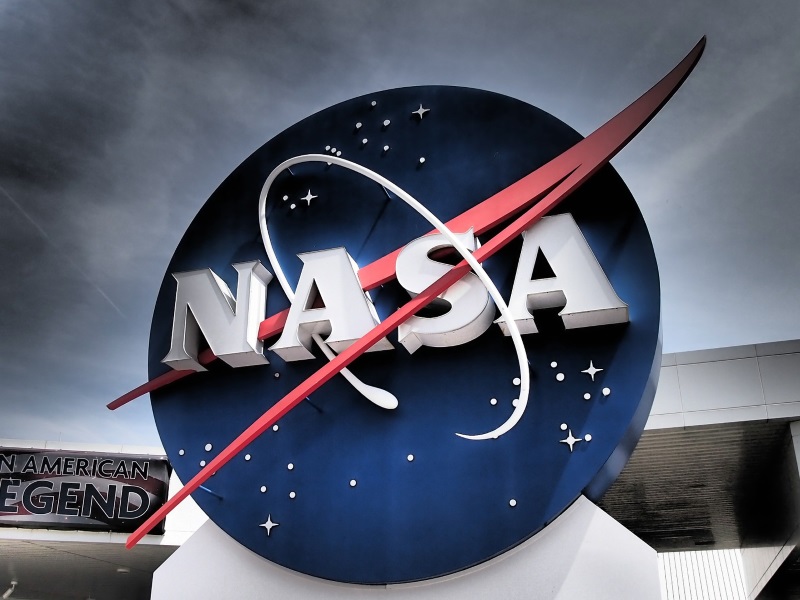
The Obama administration wants Nasa to speed up work on sending humans on deep space exploration missions, including Mars, and has instructed the US space agency to spend at least $55 million (roughly Rs. 364 crores) on a "habitation augmentation module".
According to Space.com, the funds will come from the Advanced Exploration Systems programme, part of the exploration research and development line item in the budget that received $350 million (roughly Rs. 2,322 crores) in the omnibus bill.
"Nasa shall develop a prototype deep space habitation module within the advanced exploration systems program no later than 2018," the report states.
In the last few months, Nasa has bolstered the development of a habitation module that could be tested in cislunar space (lying between the Earth and the Moon or the Moon's orbit) in 2020s. The module could then be used for human missions to Mars.
Bigelow Aerospace company has also developed a prototype expandable module that will be installed on the International Space Station (ISS) in early 2016.
According to Popular Science, it will be challenging to ensure the module is both lightweight and shields astronauts from radiation.
In a small yet significant to send astronauts to Mars, Nasa engineers have alreadly welded together the first two segments of the Orion crew module that will fly atop Nasa's Space Launch System (SLS) rocket on a mission beyond the far side of the Moon.
SLS is one of the most experienced large rocket engines in the world, with more than a million seconds of ground test and flight operations time.
When completed, SLS will enable astronauts to begin their journey to explore destinations far into the solar system.
Comments
Get your daily dose of tech news, reviews, and insights, in under 80 characters on Gadgets 360 Turbo. Connect with fellow tech lovers on our Forum. Follow us on X, Facebook, WhatsApp, Threads and Google News for instant updates. Catch all the action on our YouTube channel.
Further reading:
Advanced Exploration Systems programme, ISS, International Space Station, Mars, Nasa


Advertisement
Follow Us




-

04:49
Realme 16 Review: Air Design, 7000mAh, And More | Best Phone Under 35000 In 2026? -
05:05
Goboult Mustang Racer Smartwatch Review: Should You Get This Mustang Smartwatch? -
04:58
OnePlus Nord Buds 4 Pro Review: Specs, Sound Quality, ANC, and Battery Backup Tested -
02:29
[Sponsored] Samsung Galaxy S26 Ultra First Look: AI Smartphone for Creators, Gaming & Productivity -
04:25
Vivo X200T Review - Full Camera, Gaming & Battery Test | Worth Buying?
Advertisement
Popular on Gadgets
- Samsung Galaxy Unpacked 2026
- iPhone 17 Pro Max
- ChatGPT
- iOS 26
- Laptop Under 50000
- Smartwatch Under 10000
- Apple Vision Pro
- Oneplus 12
- OnePlus Nord CE 3 Lite 5G
- iPhone 13
- Xiaomi 14 Pro
- Oppo Find N3
- Tecno Spark Go (2023)
- Realme V30
- Best Phones Under 25000
- Samsung Galaxy S24 Series
- Cryptocurrency
- iQoo 12
- Samsung Galaxy S24 Ultra
- Giottus
- Samsung Galaxy Z Flip 5
- Apple 'Scary Fast'
- Housefull 5
- GoPro Hero 12 Black Review
- Invincible Season 2
- JioGlass
- HD Ready TV
- Latest Mobile Phones
- Compare Phones
Latest Gadgets
- Honor 600
- Honor 600 Pro
- OPPO Find X9s
- OPPO Find X9s Pro
- OPPO Find X9 Ultra
- Vivo Y6t
- Redmi K90 Max
- Redmi A7 4G
- Asus ExpertBook P5 G1
- Asus ExpertBook P3 G1
- Redmi K Pad 2
- OPPO Pad Mini
- NoiseFit Diva Araya
- OPPO Watch X3 Mini
- Xiaomi TV S Mini LED 2026 (75-inch)
- Xiaomi TV S Mini LED 2026 (65-inch)
- Asus ROG Ally
- Nintendo Switch Lite
- Haier 1.6 Ton 5 Star Inverter Split AC (HSU19G-MZAID5BN-INV)
- Haier 1.6 Ton 5 Star Inverter Split AC (HSU19G-MZAIM5BN-INV)

- About Us
- Sitemaps
- Feedback
- Archives
- Contact Us
- RSS
- Advertise
- Career
- Privacy Policy
- Ethics
- Editorial Policy
- Terms & Conditions
- Complaint Redressal
Download Our Apps
Available in Hindi
© Copyright Red Pixels Ventures Limited 2026. All rights reserved.