-
 Laptop Prices Reportedly Set to Surge Up to 35 Percent as AI Boom Drives Component Demand11 March 2026
 -
Best Laptops Under Rs. 70,000 in India: Dell 16, Asus VivoBook S14 and More10 February 2026
-
Your PC Isn’t Slow. It’s Underpowered—and Here’s the Reason Why30 January 2026
-
Amazon Great Republic Day Sale: Best Deals on Premium Gaming Laptops From Asus, MSI, and More Brands22 January 2026
-
Amazon Great Republic Day Sale: Top Deals on Laptops Under Rs. 1 Lakh20 January 2026
- Home
- Science
- Science News
- Magnetic Chips Can Boost Computer Energy Efficiency: Study
Magnetic Chips Can Boost Computer Energy Efficiency: Study
By Indo-Asian News Service | Updated: 14 March 2016 16:15 IST
Click Here to Add Gadgets360 As A Trusted Source

Advertisement
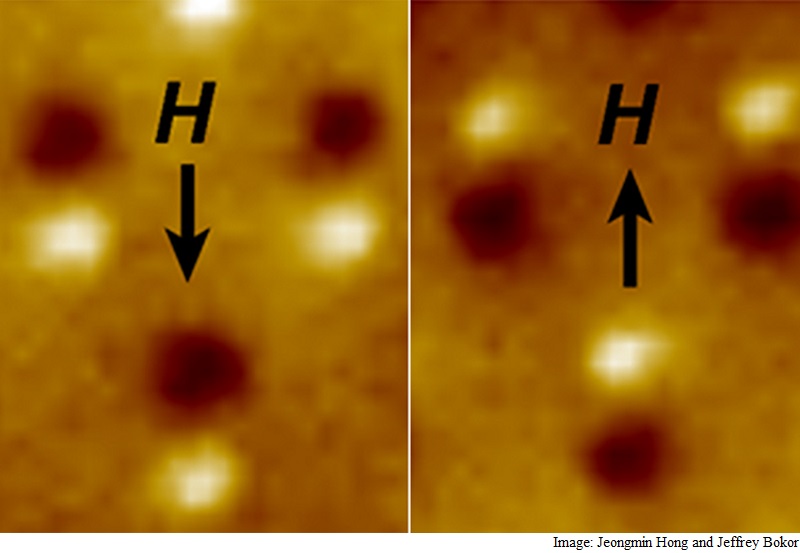
In a breakthrough for energy-efficient computing, engineers at the University of California-Berkeley have shown for the first time that magnetic chips can operate with the lowest fundamental level of energy dissipation possible under the laws of thermodynamics.
The findings mean that dramatic reductions in power consumption are possible as much as one-millionth the amount of energy per operation used by transistors in modern computers.
This is critical for mobile devices, which demand powerful processors that can run for a day or more on small, lightweight batteries.
- Laptops/notebook
- Lenovo showed several AI laptops and concept devices at MWC 2026. Do you think they will come to India?
- Apple’s low-cost MacBook is launching soon. Can it trump affordable Windows laptops?
- Are AI PCs really different from normal laptops? Which one should I buy?
- Are ARM-based Windows laptops good enough for office work?
On a larger industrial scale, as computing increasingly moves into 'the cloud', the electricity demands of the giant cloud data centres are multiplying, collectively taking an increasing share of the country's and world's electrical grid.
"We wanted to know how small we could shrink the amount of energy needed for computing," said senior author Jeffrey Bokor, a UC Berkeley professor of electrical engineering and computer sciences.
"The biggest challenge in designing computers and, in fact, all our electronics today is reducing their energy consumption," he added in a paper appeared in the peer-reviewed journal Science Advances.
Lowering energy use is a relatively recent shift in focus in chip manufacturing after decades of emphasis on packing greater numbers of increasingly tiny and faster transistors onto chips.
"Making transistors go faster was requiring too much energy," said Bokor, who is also the deputy director the Centre for Energy Efficient Electronics Science, a Science and Technology Centre at UC Berkeley funded by the National Science Foundation. "The chips were getting so hot they'd just melt."
Magnetic computing emerged as a promising candidate because the magnetic bits can be differentiated by direction, and it takes just as much energy to get the magnet to point left as it does to point right.
Comments
Get your daily dose of tech news, reviews, and insights, in under 80 characters on Gadgets 360 Turbo. Connect with fellow tech lovers on our Forum. Follow us on X, Facebook, WhatsApp, Threads and Google News for instant updates. Catch all the action on our YouTube channel.
Related Stories



Advertisement
Follow Us




-

04:49
Realme 16 Review: Air Design, 7000mAh, And More | Best Phone Under 35000 In 2026? -
05:05
Goboult Mustang Racer Smartwatch Review: Should You Get This Mustang Smartwatch? -
04:58
OnePlus Nord Buds 4 Pro Review: Specs, Sound Quality, ANC, and Battery Backup Tested -
02:29
[Sponsored] Samsung Galaxy S26 Ultra First Look: AI Smartphone for Creators, Gaming & Productivity -
04:25
Vivo X200T Review - Full Camera, Gaming & Battery Test | Worth Buying?
-
Motorola Edge 70 Pro हुआ 50MP कैमरा, 6500mAh बैटरी के साथ लॉन्च, जानें
-
Oppo Find X9s हुआ 12GB RAM, 7025mAh बैटरी के साथ लॉन्च, जानें सबकुछ
-
40 हजार रुपये सस्ता मिल रहा Google Pixel 8, जानें कितना मिल रहा डिस्काउंट
-
Vivo X300 Ultra और Vivo X300 FE अगले महीने होंगे भारत में लॉन्च, ट्रिपल रियर कैमरा यूनिट
Advertisement
Popular on Gadgets
- Samsung Galaxy Unpacked 2026
- iPhone 17 Pro Max
- ChatGPT
- iOS 26
- Laptop Under 50000
- Smartwatch Under 10000
- Apple Vision Pro
- Oneplus 12
- OnePlus Nord CE 3 Lite 5G
- iPhone 13
- Xiaomi 14 Pro
- Oppo Find N3
- Tecno Spark Go (2023)
- Realme V30
- Best Phones Under 25000
- Samsung Galaxy S24 Series
- Cryptocurrency
- iQoo 12
- Samsung Galaxy S24 Ultra
- Giottus
- Samsung Galaxy Z Flip 5
- Apple 'Scary Fast'
- Housefull 5
- GoPro Hero 12 Black Review
- Invincible Season 2
- JioGlass
- HD Ready TV
- Latest Mobile Phones
- Compare Phones
Latest Gadgets
- Honor 600
- Honor 600 Pro
- OPPO Find X9s
- OPPO Find X9s Pro
- OPPO Find X9 Ultra
- Vivo Y6t
- Redmi K90 Max
- Redmi A7 4G
- Asus ExpertBook P5 G1
- Asus ExpertBook Ultra
- Redmi K Pad 2
- OPPO Pad Mini
- NoiseFit Diva Araya
- OPPO Watch X3 Mini
- Xiaomi TV S Mini LED 2026 (75-inch)
- Xiaomi TV S Mini LED 2026 (65-inch)
- Asus ROG Ally
- Nintendo Switch Lite
- Haier 1.6 Ton 5 Star Inverter Split AC (HSU19G-MZAID5BN-INV)
- Haier 1.6 Ton 5 Star Inverter Split AC (HSU19G-MZAIM5BN-INV)

- About Us
- Sitemaps
- Feedback
- Archives
- Contact Us
- RSS
- Advertise
- Career
- Privacy Policy
- Ethics
- Editorial Policy
- Terms & Conditions
- Complaint Redressal
Download Our Apps
Available in Hindi
© Copyright Red Pixels Ventures Limited 2026. All rights reserved.