-
 Pixel Users Report Severe Battery Drain After Latest Update; Google Working on Resolving Issue22 April 2026
 -
Google DeepMind Has Reportedly Assembled an A-Team to Take on Anthropic’s AI Coding Prowess21 April 2026
-
Google Reportedly Exploring AI Inference Chip Partnership With Marvell Technology20 April 2026
-
Google I/O 2026: From Android 17 to New AI Features, What to Expect From Google's Annual Developer Conference18 April 2026
-
Google's Pixel Phones Could Support Pixel Glow Notification Feature Once Again, Android 17 APK Teardown Shows17 April 2026
- Home
- Mobiles
- Mobiles News
- Project Ara to Abandon Electropermanent Magnets After Drop Test Failure
Project Ara to Abandon Electropermanent Magnets After Drop Test Failure
By Ketan Pratap | Updated: 20 August 2015 12:02 IST
Click Here to Add Gadgets360 As A Trusted Source

Advertisement
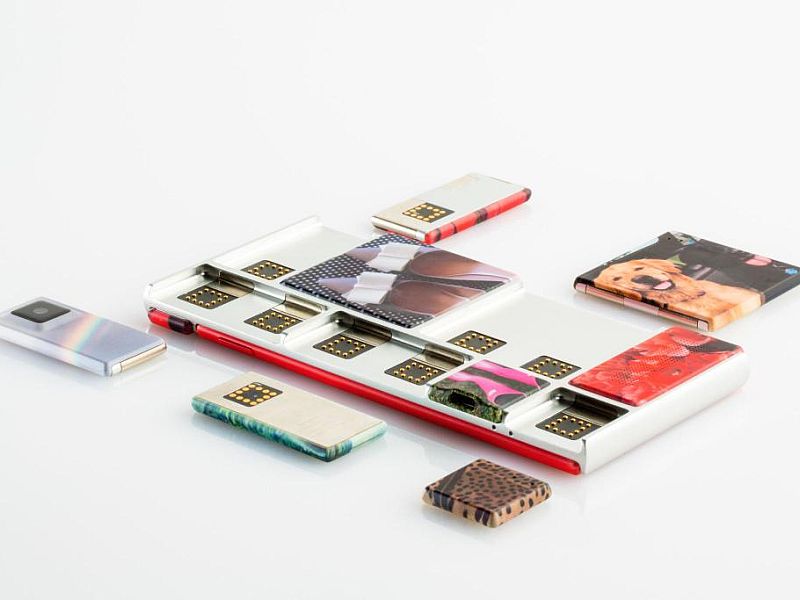
Google's anticipated Project Ara modular smartphone was recently delayed until 2016. The company however at the time hadn't revealed its reasons for delaying the project. Now, the Project Ara team in tweets has tried to explain the reason for the delay of the modular smartphone project. It said drop test failures caused it reconsider the use of the electropermanent magnets for holding the hardware modules together, as the smartphones broke apart into their component modules when dropped.
In the first tweet, Project Ara's Twitter handle said, "No more electropermanent magnets," accompanied by ProjectAra and FailedTheDropTest hashtags.
In another following tweet, it said, "We are testing a signature experience to attach/detach modules." The tweet confirms that the company is now testing an alternate option to attach and detach modules on the modular phone. While the company is yet to explain what does it mean by "signature experience."
The Project Ara team at the beginning of this year had announced it would launch the modular smartphones in Puerto Rico in 2015 as part of its pilot program. The team however recently confirmed that its phones would not launch until 2016, alongside announcing a "pilot market re-route" to a few locations in the US instead of Puerto Rico.
Announcing the news, the Project Ara team via its Twitter handle had in a series of tweets revealed that few locations in the US will see the Project Ara modular smartphone. The company had also cited "lots of iterations" in the works as a reason for delay.
To refresh, Google's concept for Project Ara is to enable consumers to design their own smartphones, and decide to add features as they need. The project hopes to kick-start an era of do-it-yourself smartphones and Google has been stressing that it's not targeting geeks. In January, Google had showcased its Spiral 2 modular smartphone prototype.
Comments
Get your daily dose of tech news, reviews, and insights, in under 80 characters on Gadgets 360 Turbo. Connect with fellow tech lovers on our Forum. Follow us on X, Facebook, WhatsApp, Threads and Google News for instant updates. Catch all the action on our YouTube channel.
Related Stories





Advertisement
Follow Us




-

04:49
Realme 16 Review: Air Design, 7000mAh, And More | Best Phone Under 35000 In 2026? -
05:05
Goboult Mustang Racer Smartwatch Review: Should You Get This Mustang Smartwatch? -
04:58
OnePlus Nord Buds 4 Pro Review: Specs, Sound Quality, ANC, and Battery Backup Tested -
02:29
[Sponsored] Samsung Galaxy S26 Ultra First Look: AI Smartphone for Creators, Gaming & Productivity -
04:25
Vivo X200T Review - Full Camera, Gaming & Battery Test | Worth Buying?
Advertisement
Popular on Gadgets
- Samsung Galaxy Unpacked 2026
- iPhone 17 Pro Max
- ChatGPT
- iOS 26
- Laptop Under 50000
- Smartwatch Under 10000
- Apple Vision Pro
- Oneplus 12
- OnePlus Nord CE 3 Lite 5G
- iPhone 13
- Xiaomi 14 Pro
- Oppo Find N3
- Tecno Spark Go (2023)
- Realme V30
- Best Phones Under 25000
- Samsung Galaxy S24 Series
- Cryptocurrency
- iQoo 12
- Samsung Galaxy S24 Ultra
- Giottus
- Samsung Galaxy Z Flip 5
- Apple 'Scary Fast'
- Housefull 5
- GoPro Hero 12 Black Review
- Invincible Season 2
- JioGlass
- HD Ready TV
- Latest Mobile Phones
- Compare Phones
Latest Gadgets
- Honor 600
- Honor 600 Pro
- OPPO Find X9s
- OPPO Find X9s Pro
- OPPO Find X9 Ultra
- Vivo Y6t
- Redmi K90 Max
- Redmi A7 4G
- Asus ExpertBook P5 G1
- Asus ExpertBook P3 G1
- Redmi K Pad 2
- OPPO Pad Mini
- NoiseFit Diva Araya
- OPPO Watch X3 Mini
- Xiaomi TV S Mini LED 2026 (75-inch)
- Xiaomi TV S Mini LED 2026 (65-inch)
- Asus ROG Ally
- Nintendo Switch Lite
- Haier 1.6 Ton 5 Star Inverter Split AC (HSU19G-MZAID5BN-INV)
- Haier 1.6 Ton 5 Star Inverter Split AC (HSU19G-MZAIM5BN-INV)

- About Us
- Sitemaps
- Feedback
- Archives
- Contact Us
- RSS
- Advertise
- Career
- Privacy Policy
- Ethics
- Editorial Policy
- Terms & Conditions
- Complaint Redressal
Download Our Apps
Available in Hindi
© Copyright Red Pixels Ventures Limited 2026. All rights reserved.