-
 OpenAI, Amazon Announce Multi-Year Strategic Partnership as Microsoft’s Exclusive Deal Ends29 April 2026
 -
Cutting Through the Noise: How Amazon India is Reinventing AI Discovery20 April 2026
-
Battleground Season 2 Now on OTT: Know Where to Watch This Ultimate Fitness Reality Show Online18 April 2026
-
Apne Paraye Out on OTT: Know Where to Watch This Hindi Dub of Bengali Drama Series18 April 2026
-
Amazon Launches AI Store to Help Users Discover and Shop AI-Powered Devices16 April 2026
- Home
- Internet
- Internet News
- Amazon Warehouse Workers Won't Be Paid for Security Check Wait
Amazon Warehouse Workers Won't Be Paid for Security Check Wait
By Agence France-Presse | Updated: 10 December 2014 11:31 IST
Click Here to Add Gadgets360 As A Trusted Source

Advertisement
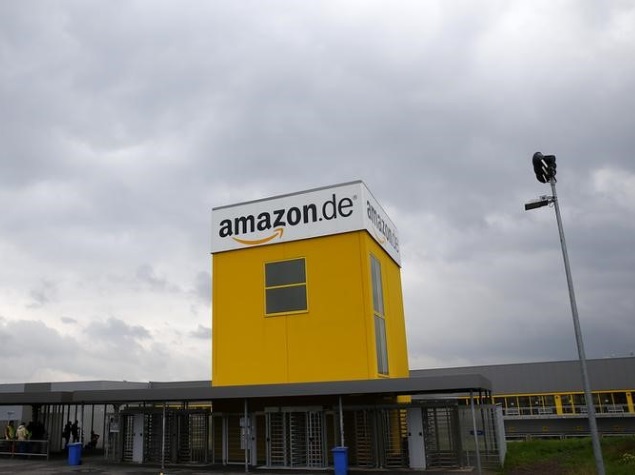
Employees who prepare packages for Amazon will not be paid for the time it takes them to pass through security to verify they have not stolen warehouse goods, the US Supreme Court ruled Tuesday.
Due to an insufficient number of detectors, employees said they spent an estimated 25 minutes waiting to be searched, but the high court unanimously ruled that was not a part of their workday and therefore not subject to overtime pay.
The suit was filed by two former employees of an Integrity Staffing Solutions warehouse in the southwest US state of Nevada, where they pulled products from shelves and prepared packages to be delivered to Amazon clients.
- What is the Rufus chatbot in the Amazon app?
- Why do we not hear Amazon's name much when it comes to the AI race? What is AWS doing?
- Tip: Buying a phone on Flipkart/Amazon? Always record the unboxing!
- How many subscriptions are you currently paying for?
- What is this AI content marketplace I'm seeing everywhere on news?
The employees argued that daily screenings before leaving were meant to "prevent employee theft... solely for the benefit of the employers and their customers."
In a class-action suit filed in 2010, they asked for compensation under a federal law, the Fair Labor Standards Act (FLSA), for "the time that respondents spent waiting to undergo and undergoing security screenings."
They argued that time could be cut "by adding more security screeners or by staggering the termination of shifts."
An appeals court originally upheld their argument, but the Supreme Court's nine justices sided against the lower court in their first decision of this session.
"The time that respondents spent waiting to undergo and undergoing security screenings is not compensable under the FLSA," the court said in an opinion by Justice Clarence Thomas.
The court ruled that security and anti-theft measures, whether benefiting the employee or employer, were "not the principal activities the employees were employed to perform" nor were they "integral and indispensable" to the job, as required under federal law for payment.
They added that the decision was consistent with guidelines issued in 1951 from the US Department of Labor.
Comments
Get your daily dose of tech news, reviews, and insights, in under 80 characters on Gadgets 360 Turbo. Connect with fellow tech lovers on our Forum. Follow us on X, Facebook, WhatsApp, Threads and Google News for instant updates. Catch all the action on our YouTube channel.
Related Stories






Advertisement
Follow Us




-
![[Sponsored] Candlelight. Night vibes. Incredible video. This is low-light videography on Galaxy S26 Ultra](https://www.gadgets360.com/static/desktop/images/spacer.png)
01:10
[Sponsored] Candlelight. Night vibes. Incredible video. This is low-light videography on Galaxy S26 Ultra -
01:11
[Sponsored] Who needs bulky gear when your phone shoots like this? -
04:49
Realme 16 Review: Air Design, 7000mAh, And More | Best Phone Under 35000 In 2026? -
05:05
Goboult Mustang Racer Smartwatch Review: Should You Get This Mustang Smartwatch? -
04:58
OnePlus Nord Buds 4 Pro Review: Specs, Sound Quality, ANC, and Battery Backup Tested
Advertisement
Popular on Gadgets
- Samsung Galaxy Unpacked 2026
- iPhone 17 Pro Max
- ChatGPT
- iOS 26
- Laptop Under 50000
- Smartwatch Under 10000
- Apple Vision Pro
- Oneplus 12
- OnePlus Nord CE 3 Lite 5G
- iPhone 13
- Xiaomi 14 Pro
- Oppo Find N3
- Tecno Spark Go (2023)
- Realme V30
- Best Phones Under 25000
- Samsung Galaxy S24 Series
- Cryptocurrency
- iQoo 12
- Samsung Galaxy S24 Ultra
- Giottus
- Samsung Galaxy Z Flip 5
- Apple 'Scary Fast'
- Housefull 5
- GoPro Hero 12 Black Review
- Invincible Season 2
- JioGlass
- HD Ready TV
- Latest Mobile Phones
- Compare Phones
Latest Gadgets
- Moto G47
- Motorola Razr 2026
- Motorola Razr+ 2026
- Motorola Razr Ultra 2026
- Moto G37
- Moto G37 Power
- Moto G87
- OnePlus Ace 6 Ultra
- Dell XPS 16
- Dell XPS 14
- OnePlus Pad 4
- Redmi Pad 2 9.7 4G
- NoiseFit Diva Araya
- OPPO Watch X3 Mini
- Xiaomi TV S Mini LED 2026 (75-inch)
- Xiaomi TV S Mini LED 2026 (65-inch)
- Asus ROG Ally
- Nintendo Switch Lite
- Voltas 1 Ton 3 Star Inverter Split AC (183V Vectra Zenith Silver(4503752))
- Voltas 1 Ton 3 Star Inverter Split AC (123V Vertis Smart Elite Gold(4503704))

- About Us
- Sitemaps
- Feedback
- Archives
- Contact Us
- RSS
- Advertise
- Career
- Privacy Policy
- Ethics
- Editorial Policy
- Terms & Conditions
- Complaint Redressal
Download Our Apps
Available in Hindi
© Copyright Red Pixels Ventures Limited 2026. All rights reserved.